Showing posts with label shark. Show all posts

Friday, 2 September 2016

5 Cannibalistic Animals

   
 Cannibalism is the act of an individual species consuming another individual of the same species for food. A lot of people would look at cannibalism among animals in a horrible way; but it is actually very common in the ecological interaction. And a lot of you might assume that cannibalism happens among most carnivores, but it is actually more often among herbivores and detritivores.

This list won't be providing all animals with 'cannibalistic' behavior since there are up to 1, 500 documented animals eating their own species all over the world. Instead, this list will be compiling 5 animals with common and interesting cannibalism acts.

Please take note that this is not a 'ranking' but just a mere list. I will also be excluding 'sexual cannibalism'.

1.Cats


en.wikipedia.com


 Male cats eat the offspring to bring the female cat back to 'heat'.
Female cats rarely eat their litters but if it happens, it is of a perfectly reasonable explanation. Cannibalism usually occurs on the mother's 2nd pregnancy due to the mother prioritizing self-preservation. It might have been drained of significant resources from the 1st pregnancy . Sometimes, females eat the larger litters and leave the newborn with higher survival rate to live. They also occasionally consume the weak and sickly litters, justifying it with the reason of saving maternal investments.

2.Frogs


www.popsci.com


-A lot of studies and observations have been done that proves some of the frog species to be 'cannibalistic'. One of them is the African Bullfrog. They eat a lot of things including insects, small rodents, reptiles, small birds and other amphibians. Sometimes, they also eat the tadpoles that they're guarding.
Cannibalism of frogs mostly happens among the young-lings which are the tadpoles. Even though they consume their pond mates or siblings, they're not vile or ruthless creatures. They will only eat the other tadpoles when resources are scarce; so we can conclude that it's a 'survival nature' among the tadpoles.
- Researchers have stated that Biodiversity affects the appetite of frogs. Cannibalism is most likely to be found in a habitat full of frogs rather than a location with the lesser population.

3.Octopuses
www.zmescience.com


The cannibalism act of octopuses has only been recently discovered. They've been caught in the act for 3 times, providing enough evidence to prove it's cannibalistic behavior.
--> The first case was when a diver removed stones from the opening of a den to reveal a male octopus weighing 2kg, feasting on a dead octopus (0.5kg).
--> The second case was another diver witnessing a larger male octopus (2.2kg) carrying another octopus (roughly 0.54kg) in it's arms. It was stated that the victim was not yet dead due to the witness seeing it moving it's arms(tentacles) and trying to break free. Upon seeing the diver, the octopus immediately released the victim.
After all of this incident, it was confirmed that the octopuses eat other octopuses even WITH other meal options; which leans to non-survival related cannibalism.

Check out 'Top 10 Most Highly Intelligent Animals' !

4.Sand Tiger Sharks
www.fineartamerica.com


The Sand Tiger Sharks have been a famous subject in cannibalism due to the act of consuming the same species since they were embryos. Yes, embryos.
This type of cannibalism is called Intrauterine Cannibalism which means cannibalism within the uterus.
-There are two types of Intrauterine Cannibalism:
*Embryophagy/Adelphophagy (eating one's brother)
 The largest and strongest embryo consumes it's lesser womb-mates.

*Oophagy/Oviphagy (egg-eating)
-This type of Intrauterine Cannibalism is more common among Sand Tiger Sharks where developing embryos feed on a steady supply of tiny, unfertilized eggs.
Oophagy Cannibalism has been documented since 1907.

Check out 'The Most Dangerous Shark on Earth'

5.Polar Bears
assets.worldwildlife.org


Polar Bears are a new case in the cannibalism world since the worsening of global warming. Researchers have concluded that this behavior was resorted because of the difficulties in getting their main diet which are the seals. During Summer and Autumn, seals will usually move to a different location (further North) which is beyond the Polar Bears' reach. This scenario has lead the polar bear species to resort to cannibalism. A lot of cases have included big, male polar bears feeding on the small cubs.

 
Thanks for reading!

Wednesday, 20 January 2016

Stop Shark Finning

What is Shark Finning?
Shark Finning is the removal and retention of shark fins while the rest of the body is discarded into the sea. So basically, the fins are cut off when the sharks are fully alive and they are thrown into the sea, finless and hopeless. The sharks would either die of starvation, for they cannot swim and search for food, or get eaten alive by other fishes. This, is how tragic shark finning is.


www.supportoursharks.com

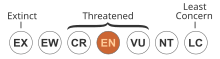
Shark finning has been going on for decades but rose up in 1997 due to high demands for shark fin soups and traditional cures. After the explosion of Shark Fin Soup around the world especially in Asia, the population of sharks had been declining drastically and had dropped their conservation status to Threatened (Vulnerable, Endangered, Critically Endangered.)

https://upload.wikimedia.org/wikipedia/commons/thumb/7/70/Status_iucn3.1_EN.svg/220px-Status_iucn3.1_EN.svg.png 


There were restrictions made, internationally and nationally, but Shark Finning is still undeniably happening around us. The global catch in 2012 alone is a surprising amount of 100 million. Since sharks are on top of the food chain, the great number of decline in sharks' population are surely going to disturb the whole system. This is going to affect other animals and change the whole picture of biodiversity.


http://image.slidesharecdn.com/shark-140909042733-phpapp02/95/shark-attack-information-2-638.jpg?cb=1410236895
www.slideshare.net


Example of Shark Fin Soup


A lot of shark species were involved in Shark Finning and all of them are moving towards extinction if not stopped. One of the most famous shark species of all time, The Great White is now 'vulnerable' including Sand Tiger, Basking Shark and a lot more. Angel Shark and Ganges Shark falls under 'Critically Endangered' together with many other species's.


We can help the sharks to survive if we join campaigns and donate to the rightful organizations. I hope we can all save the sharks by stopping shark finning near in the future.


Monday, 28 December 2015

The Most Dangerous Shark on Earth

A lot of people tend to misinterpret the popularity of Great White Sharks, regarding them to be the most aggressive and dangerous. But Great White Sharks are deadly, not dangerous and I would highly emphasize that deadly is not the same as dangerous.

Deadly means causing or able to cause death.

While dangerous means able or likely to cause harm or injury.


The definitions might be very confusing but there are slight differences. So I hereby represent to you, the most dangerous shark in the world, Bull Shark.


wheredosharkslive.com

Bull Shark has a slightly different nature compared to other sharks since they have the ability to survive in freshwater despite it not being their true habitat.This leads to more possibility in harming humans due to it's near location to human civilization than other types of sharks.


Bull Sharks, also called the Zambezi Sharks, eats variety of carnivorous menu like Osteichthyes (bony fishes), small sharks, turtles, birds, dolphins, terrestrial mammals, etc. They even occasionally step into cannibalism where they feed on other Bull Sharks!

www.livescience.com


Since the male and female Bull Sharks can grow up to 7 and 11 feet in length respectively, they are very difficult to escape from. But thankfully, according to people of expertise, Bull Sharks that stay in the rivers are mostly the newborn and the young ones. As they age, they cope to the salinity (measurement of salt in water) of the ocean and eventually move on to live there. This is why a lot of Bull Sharks tend to reproduce in the rivers and make sure that the environment for their newborns are safe.

To predict when the Bull Sharks might appear somewhere around your neighborhood river, you really have to know their mating and reproduction season. Bull Sharks mate during late summer and early autumn. After 12 months of gestation (pregnancy), the females would search for suitable, low-salinity locations which leans towards the rivers and give birth in that area. So the best time to avoid playing around or camping by the river is technically during the autumn season.

Now, here's a fun fact for you guys. Several bull sharks were involved in the Jersey Shore Shark attacks of 1916 and this inspired Peter Benchley to produce his well-known novel, Jaws (which then was adapted into a movie). Though the movie focuses more on Great White Sharks, Bull Sharks also played a role as the inspiration for this highly successful film.

 And flash news! Recently, on the 15th December of 2015, a man had caught an enormous Bull Shark in the river where his kids would swim!  Click here to read the article!